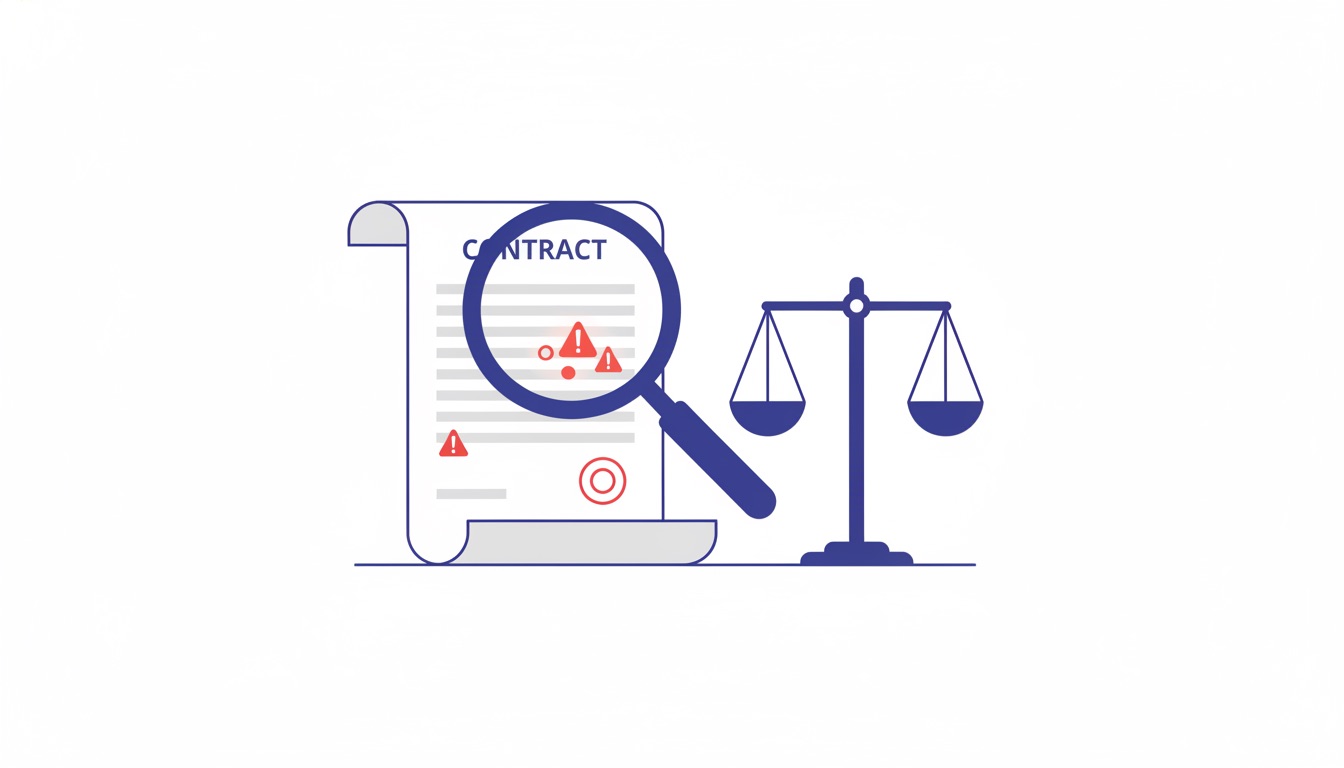
High-impact clauses
These sections usually deserve the closest attention because they affect money, ownership, and consequences.
- Payment terms, late fees, renewals, penalties, and refund limits.
- Termination rights, notice periods, cure periods, and survival clauses.
- Indemnity, limitation of liability, warranties, and disclaimers.
- Ownership of work product, IP assignment, licenses, and portfolio rights.
- Confidentiality, non-disparagement, non-compete, and non-solicitation language.
For a focused first pass, compare the language with our NDA red-flags guide or SaaS terms checklist, then run the exact clause through the analyzer.
One-sided patterns
A contract may be acceptable even if it is not perfectly balanced, but one-sided terms should be visible before you agree.
- Only one party can terminate for convenience.
- You indemnify the other side broadly, but they do not indemnify you.
- The other party can change price, scope, or rules without approval.
- Your remedies are capped while your obligations are unlimited.
- Disputes must happen in a distant venue or expensive process.
How to review faster
If time is short, paste the clauses with the highest downside first.
- Start with payment, termination, liability, indemnity, IP, and confidentiality.
- Compare the AI summary with the original text before making a decision.
- Get professional advice for high-value, regulated, or long-term commitments.
Example: indemnity clause
Input
You agree to defend, indemnify, and hold harmless the company from any claims arising out of your use of the services.
What to notice
- You may have to cover the company's costs if your use creates a claim.
- The clause may be broad if it does not limit claims to your fault.
- Look for exceptions, caps, and mutual obligations.
Contract risk FAQ
What is a high-risk contract clause?
A high-risk clause can create large costs, broad liability, loss of ownership, hard-to-exit obligations, or weak remedies if the other side fails.
What does indemnify mean?
Indemnify usually means one party agrees to cover certain losses, claims, damages, or legal costs for another party.
What is a limitation of liability?
It limits how much one party can recover if something goes wrong. The cap, exceptions, and excluded damages matter.
Should I analyze the full contract?
For small agreements, yes. For long agreements, start with the clauses that affect money, ownership, termination, liability, and disputes.
Is a risky clause always a dealbreaker?
No. A risky clause may be negotiable, acceptable in context, or balanced elsewhere. The point is to see it clearly before deciding.
Which clauses should I check before signing?
Start with payment, renewal, termination, indemnity, liability, intellectual property, confidentiality, dispute venue, and any clause that survives the contract.